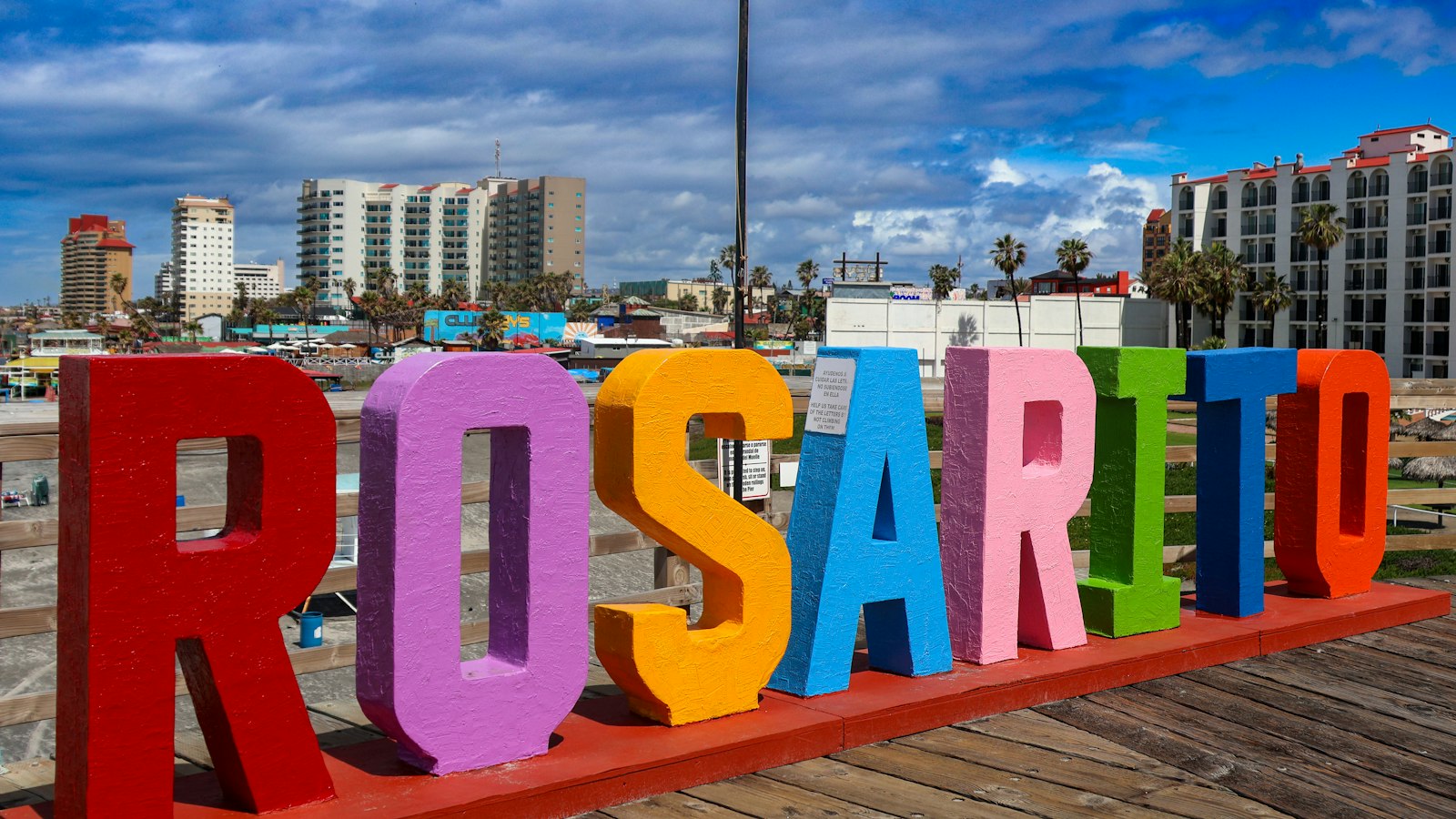
If you’re trying to figure out where to get ibogaine treatment, here’s our answer: with us, at Freedom Ibogaine, a medically supervised clinic on the Baja coast in Rosarito, a short drive south of San Diego.
Yes, we’re biased. But we’d also rather you understand the whole picture before you call anyone, us included. So this guide explains why Americans can’t get ibogaine at home, why nearly everyone ends up in Baja California, what a week with us actually looks like, and what to ask any clinic before you hand over your heart, your trust and your savings.
The short answer: You can’t legally get ibogaine treatment in the US outside of research trials. Most Americans go to Mexico. At Freedom Ibogaine, you fly into San Diego, we arrange your ride to Rosarito, and a doctor reviews your EKG and full blood work before approving your flood dose. The core program is seven nights.
Why You Can’t Get Ibogaine Treatment in the US
Ibogaine is a Schedule I drug under federal law, the category for substances the government says have no accepted medical use. In practice, that means no doctor, hospital or clinic anywhere in the country can give it to you outside an approved study.
That official position is getting harder to defend. Texas set aside $50 million in 2025 for ibogaine clinical trials. Mississippi followed with a $5 million trial law in March 2026, and Arizona, Kentucky and Tennessee have funded or authorized their own research. Then, on April 18, 2026, the President signed an executive order that names ibogaine and tells the FDA and DEA to build a path for some patients under the federal Right to Try law.
However, none of that has opened a single door yet. The order doesn’t legalize or reschedule ibogaine, and Right to Try generally applies only to drugs that have finished early safety trials, which ibogaine hasn’t done in the US. The state trials, meanwhile, will enroll small groups of carefully chosen people. They’re research, not a place to get help this year. (For the full story on the law, read our guide: is ibogaine legal in the US?)
There’s an irony here we can’t resist pointing out. A drug can’t earn an “accepted medical use” without big trials, yet for decades it was nearly impossible to run big trials on a Schedule I drug. The loop only started to break because veterans who got treated in Mexico came home and kept talking, first to their families, then to reporters and finally to lawmakers. Until those trials finish, getting ibogaine treatment means leaving the country.
Why Mexico, and Why Rosarito
Mexico doesn’t prohibit ibogaine, and it has hosted ibogaine programs for decades. In fact, much of the published research on ibogaine for opioid use comes from people treated at clinics in Mexico. Stanford’s 2024 study of 30 special operations veterans also followed people who were treated there.
We chose Rosarito, on the Baja coast, for a simple reason: it’s close. Rosarito is about 30 miles from San Diego, so you can fly in from almost anywhere in the US and be with us the same day. If you live in Southern California, you can skip the flight entirely. (For the details, see our guide to ibogaine treatment near San Diego.)
If you’ve been searching for “ibogaine treatment Tijuana,” you’re in the right area. Rosarito sits on the coast about 25 minutes south of Tijuana, so you get the short trip from the border without staying in the middle of a big city. For many Americans, that makes Baja the most practical place to get ibogaine treatment.
Still, it’s worth saying plainly how strange this is. People are crossing an international border for a treatment their own state is spending millions to study. It’s medical tourism by necessity, not by choice. Most people we talk to would rather do this close to home and their own doctor. Since the law doesn’t allow that yet, our job is to make the trip short, simple and medically serious.
Getting Ibogaine Treatment at Freedom Ibogaine, Step by Step
Knowing where to get ibogaine treatment is only half the question. The other half is what actually happens once you get there. Here’s what the process looks like with us, from the first phone call to the drive home.
1. You apply or call. The online application takes a few minutes. It asks what you use, your health history and a few basics like height and weight, because those shape the medical plan. Then our team calls you to talk it through.
2. We plan around what you use. Heroin and most pain pills clear quickly. Fentanyl, methadone, Suboxone and kratom linger, so they need a supervised switch to a short-acting opioid before ibogaine is safe. That switch adds days at the start, and screening decides how many.
3. You travel to San Diego. Fly or drive there, and we arrange your ride to Rosarito. Bring a passport, passport card or trusted traveler card (SENTRI or Global Entry) so you can come back across by land.
4. Screening comes first. On arrival, our doctor runs an EKG and full blood work and goes through your medication list and history. Nobody gets a dose until the doctor signs off. Sometimes the answer is no, and we’d rather tell you that than take a risk with your heart.
5. The flood dose. It’s usually given on day two or three, while a doctor and a nurse stay on site and watch your heart the whole time. The session lasts many hours, and most people rest for a day or two afterward.
6. Recovery and heading home. The rest of the seven nights are for resting, eating real meals and getting your feet back under you, with 24/7 care the whole time. Then you head home with a plan.
That’s the program: short, medically focused and built around one supervised flood dose. You can read more about how our flood dose program works.
What We Treat
Most of the people who come to us are dealing with opioids, but not all of them. Each of these pages explains how timing and safety work for that specific drug:
- Heroin and pain pills
- Fentanyl
- Methadone
- Suboxone
- Kratom and 7-OH
- Alcohol
- Meth
- PTSD and trauma, including a program for veterans and first responders
Using something that isn’t on this list, or more than one thing? Ask us. Mixed use is common, and it changes the plan.
Why a Medical Clinic, Not a Retreat
Here’s the part of the ibogaine world nobody puts on a brochure. Because Mexico doesn’t specifically regulate ibogaine, there’s no license that separates a medical clinic from a retreat. Some places have a doctor, a nurse and heart monitoring. Others have a facilitator, a playlist, good intentions and a gorgeous Instagram account.
That gap matters because of what ibogaine does to the heart. It slows the heart’s electrical recovery between beats, which doctors call QT prolongation, and the effect can last for days. When researchers reviewed 19 deaths reported after ibogaine use, most of the cases with enough information involved existing heart problems, other drugs in the system or seizures from withdrawal. In other words, most of the danger sits in things a real medical screening is designed to catch.
That’s why we run things the way we do: screening before anything else, a doctor and a nurse on site for the dose, and heart monitoring throughout. Whoever you choose, ask them the same questions you’d ask us:
- Will I have an EKG and full blood work before any dose?
- Who is in the room during the session, and is one of them a doctor?
- Is my heart monitored the whole time?
- What’s your plan for fentanyl, methadone, Suboxone or kratom?
- Have you ever turned someone away? A clinic that never says no is telling you something.
Our guide to ibogaine retreats vs. medical clinics goes deeper.
Other Places to Get Ibogaine Treatment
Mexico isn’t the only option on paper. Then again, “legal” and “available” aren’t the same thing, and for most Americans the alternatives are a lot farther away.
| Country | Legal status | What it means for you |
|---|---|---|
| Mexico | Not prohibited | Where most Americans go. Quality varies from clinic to clinic. |
| New Zealand | Prescription medicine since 2009 | Legal with a prescription, but few providers and a 13-hour flight from Los Angeles. |
| Brazil | Prescription use since 2016 | Allowed under medical supervision. Far away, with care in Portuguese. |
| South Africa | Prescribable since 2016 | Doctors can prescribe it under conditions. A long trip. |
| Costa Rica | Not illegal, not regulated | A small number of programs, many retreat-style. |
| Canada | Prescription-only since 2017 | Very hard to find in practice. Health Canada has seized ibogaine from providers. |
| United States | Schedule I | Research trials only. |
So for most people in the US, the real answer to where to get ibogaine treatment is Baja California, and that’s exactly why we’re there.
Cost, Insurance and Discounts
Our program has one clear price, listed on our cost page along with everything it covers. Longer stays for fentanyl, methadone, Suboxone or kratom are priced after screening. We offer a discount for veterans and first responders. We don’t accept insurance, since US insurers don’t cover a treatment that isn’t FDA-approved.
Where to Get Ibogaine Treatment: Common Questions
Can I get ibogaine treatment in the US?
Not outside an approved research trial. Ibogaine is still Schedule I, even in states that are funding studies, and the 2026 executive order didn’t change that.
Is it legal to go to Mexico for ibogaine treatment?
Mexico doesn’t prohibit ibogaine, and Americans travel there for treatment every week. Just don’t try to bring any back, since importing it into the US is illegal. We’re not lawyers, so ask one if you have a specific legal concern.
How far is your clinic from San Diego?
Rosarito is about 30 miles south of San Diego, usually under an hour depending on the border. Fly into San Diego, and we arrange the ride from there.
How long will I be away?
The core program is seven nights. Fentanyl, methadone, Suboxone and kratom need extra days up front for the switch. We’ll give you a real estimate after we hear what you use.
Do I have to stop my medications before I come?
No, keep taking them until our doctor reviews your list. Don’t stop opioids, alcohol or benzodiazepines suddenly on your own.
How do I get started?
Fill out the application or phone (619) 485-0198. There’s no commitment, and we’re happy to answer questions first.
Ready to Talk?
If you’ve read this far, you’re probably past the “is this real?” stage and into the “could this work for me?” stage. That’s a conversation, not a form. Apply online or call (619) 485-0198, and our team will walk you through what treatment with us would look like for you.
Sources
- The White House. Fact Sheet: President Donald J. Trump Is Accelerating Medical Treatments for Serious Mental Illness (April 18, 2026).
- Petrie-Flom Center, Harvard Law School. A New Executive Order on Psychedelics: Q&A with I. Glenn Cohen and Mason Marks (April 18, 2026).
- Texas Tribune. Texas to Conduct Its Own Ibogaine Clinical Trials (March 31, 2026).
- Magnolia Tribune. Governor Signs Ibogaine Clinical Trial Bill Into Law (March 30, 2026).
- Health Canada. Notice: Prescription Drug List, Multiple Additions (May 2017).
- Koenig X, Hilber K. “The anti-addiction drug ibogaine and the heart: a delicate relation.” Molecules (2015).
- Alper KR, Stajić M, Gill JR. “Fatalities temporally associated with the ingestion of ibogaine.” Journal of Forensic Sciences (2012).
- Cherian KN et al. “Magnesium–ibogaine therapy in veterans with traumatic brain injuries.” Nature Medicine (2024).